By Engineer Iftikhar Chaudhry
Today, after seeing the photograph of the meeting between Sohail Khan Afridi and Mian Shehbaz Sharif, a sense of relief arose in my heart—not because this image signified any secret deal or retreat, but because it symbolized a simple truth: dialogue is still alive in Pakistani politics. Unfortunately, in our country even a photograph is not allowed to exist in peace. It was immediately turned into a battle of Form 47 versus Form 45, as if this were not politics but a perpetual war.
I have said this from day one: the path of politics is not confrontation, it is dialogue. No matter what war takes place in the world, its solution ultimately emerges at the negotiating table. But we have turned social media into the primary battlefield of politics. Today, social media has become a slingshot—you can place any pebble or stone on it and release it blindly. The target is not just one individual; the damage is done to an entire movement, the whole society, and eventually the state itself.
It must now be said plainly, without any hesitation: anyone who sits abroad and collectively targets the entire Pakistani army is not one of us. It does not matter by what name he is known, or even if he claims to be the biggest well-wisher of my own party. My position is clear. Even if someone belongs to my party but stands against this principle, I do not consider him my own.
If Javed Hashmi were active in practical politics today, he would be senior to all of us. He disagreed, he criticized, but he never practiced the politics of burning institutions collectively. This is the difference between political maturity and political suicide.
Today, some YouTubers sitting in the United States, the United Kingdom, and other countries rain fire day and night on the state, the army, and politics. Bringing about a revolution while sitting abroad is easy—no cases, no jail, no batons, no tear gas. Real politics is done by staying inside the country, by enduring pressure, by making sacrifices. This is the work of people like Ali Muhammad Khan and Azam Swati—and unfortunately, it is these very people whom we put into the most difficulty.
I have one straightforward message for all these so-called “revolutionaries” sitting abroad:
From the money you earn on YouTube, spend at least half on the PTI workers and families who are genuinely in hardship. I know foreign funding is a sensitive issue and the law exists in its own place—but those who truly want to help always find a way. Today, there is not even flour in the homes of our martyrs, no medicines for children, no educational supplies—while your tongues spit dollars, views increase, but the worker standing on the ground is left alone. This is not politics; this is exploitation.
We must also accept that in this confrontation with the army, we have suffered a massive loss. I have said from the very beginning that the army is ours, and we must care about the army. Neither the movement became stronger from this fight, nor democracy, nor did the people benefit. The only damage was to the country, to institutions, and to the ordinary worker. Abusing institutions collectively is neither bravery nor revolutionary thinking—it is a direct weakening of the country.
In this context, Ali Amin Gandapur should also be viewed fairly. Defeating an experienced politician like Maulana Fazlur Rehman was no easy task. Going into sensitive areas like Waziristan, managing the situation, hosting guests, rebuilding trust—this is practical politics, not social-media politics. Yet unfortunately, it has become our habit to make someone a hero today and label him a traitor tomorrow.
We ourselves lift people up, and then suddenly pull the ladder away from beneath them. This culture of temporary hero-making and instant character assassination is neither in the interest of the party nor of the country. Politics demands patience, tolerance, and consistency—not shouting and screaming.
My request to my own people is simple: have patience. Pause—think calmly. Stop considering every meeting a conspiracy and every dialogue a weakness. There is no harm in trying to talk. The outcome may not be according to our wishes, but at least it will not lead to destruction.
And finally, there is something that is morally, humanly, and politically necessary to say.
If we are truly struggling for the release of Imran Khan, then we must also raise our voices for the release of Bushra Bibi. What is her crime? Under which law, which morality, and which justice is she imprisoned? Silence here becomes complicity with oppression.
Bushra Bibi has remained loyal. She stood by him and did not step back in difficult times. The role she played, the patience, restraint, and steadfastness she demonstrated—examples of such loyalty are rare in Islamic history. We have always read stories of loyalty in books, but when loyalty stands before us in reality, we avert our eyes. This attitude is neither religious, nor human, nor political.
If we are to demand justice, we must demand it completely. If we are to stand against oppression, we must stand for every oppressed person—whether man or woman. Taking Bushra Bibi’s name alongside Imran Khan is not a political liability; it is a moral obligation.
A movement that abandons its loyal people in difficult times does not remain honorable in history for long.
And a nation that forgets loyalty cannot even claim justice.
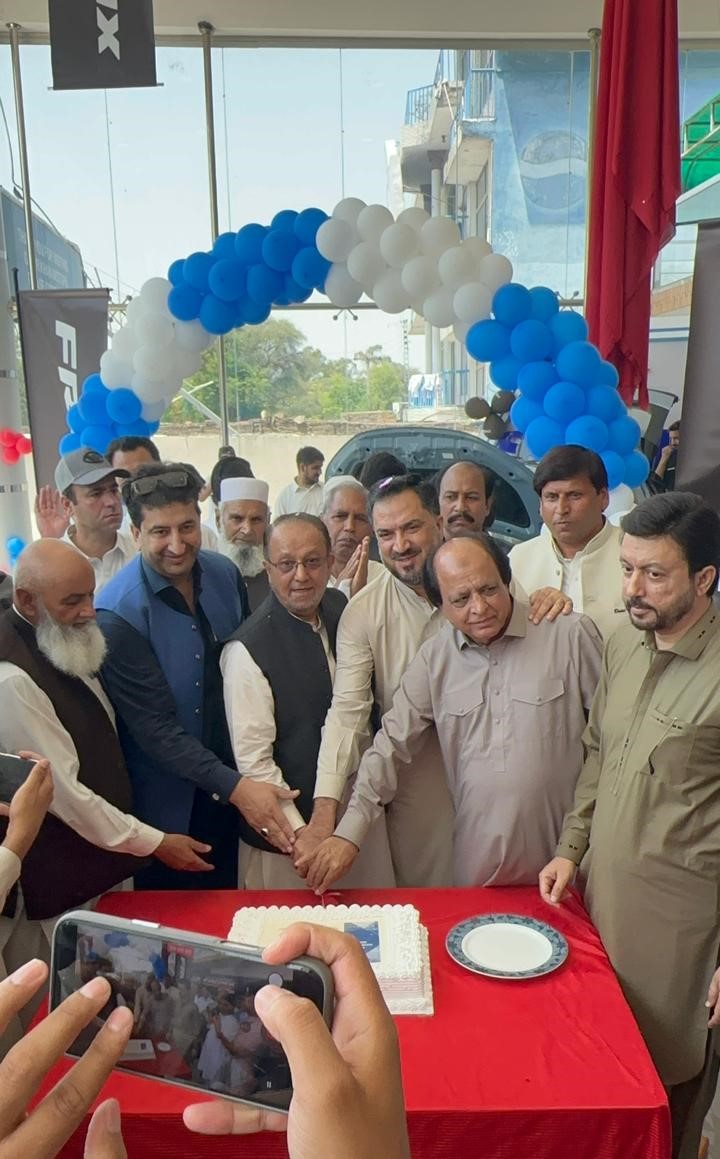
The Suzuki Fronx has been officially launched in Pakistan, Qazi Shoukat mehmood cutting the cake
Post Views: 374 The Suzuki Fronx has been officially launched in Pakistan as of May 2026, introducing a B-segment crossover